|
2026
|
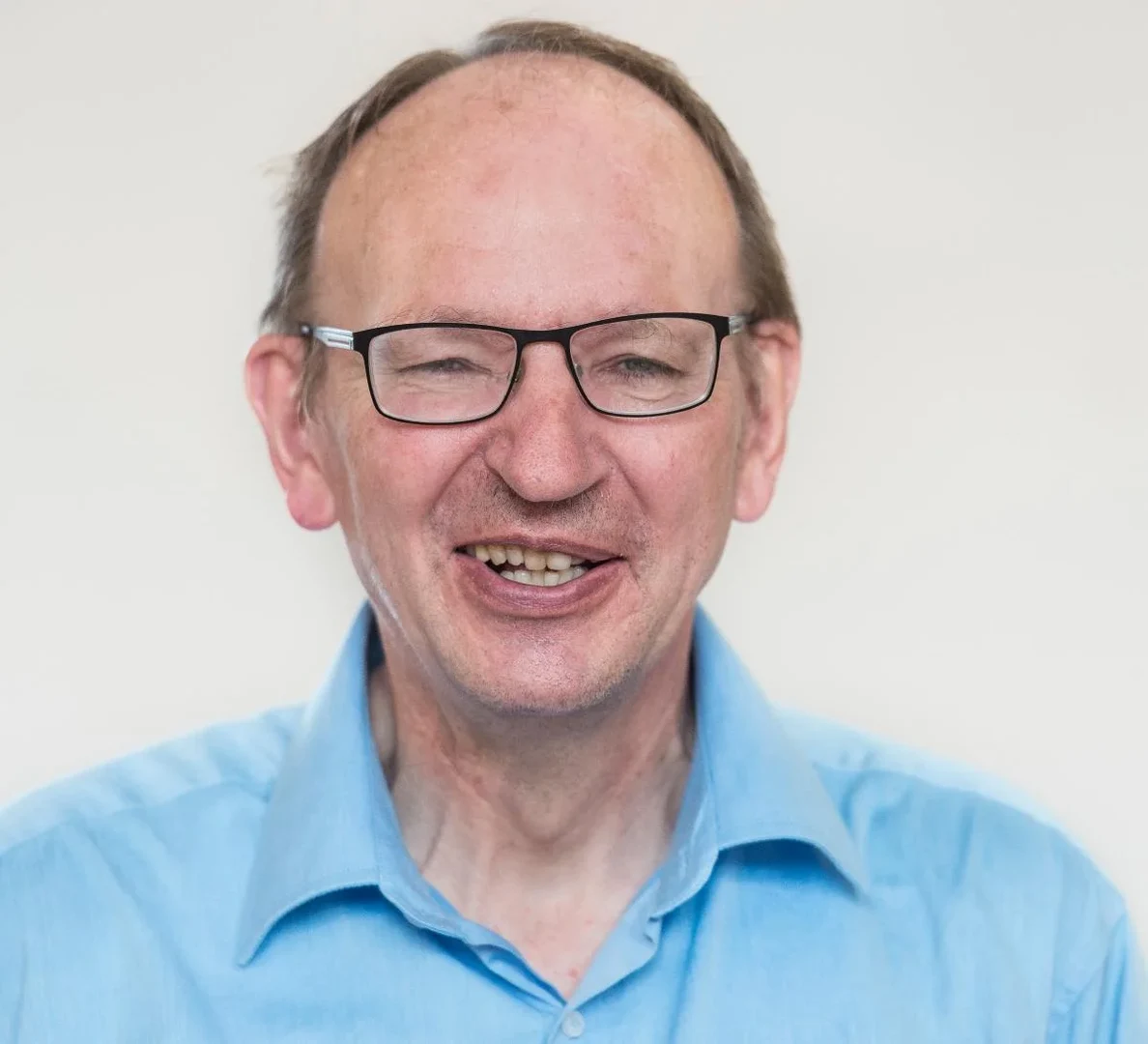
Gerd Faltings
|
Mathematician (arithmetic geometry)
|
|
|
Gerd Faltings is a German mathematician renowned for proving the Mordell conjecture (1983), earning him the Fields Medal in 1986. He directed the Max Planck Institute for Mathematics, Bonn (1994-2018), after professorships at Wuppertal and Princeton. He was awarded the 2026 Abel Prize for introducing powerful tools in arithmetic geometry and resolving long-standing Diophantine conjectures of Mordell and Lang.
|
|
2025
|
|
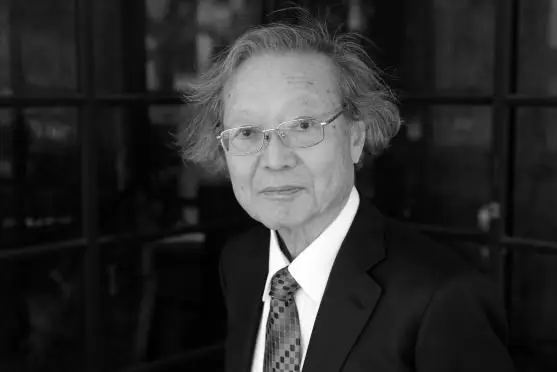
Mathematician (algebraic analysis, D-module theory, representation theory)
|
|
|
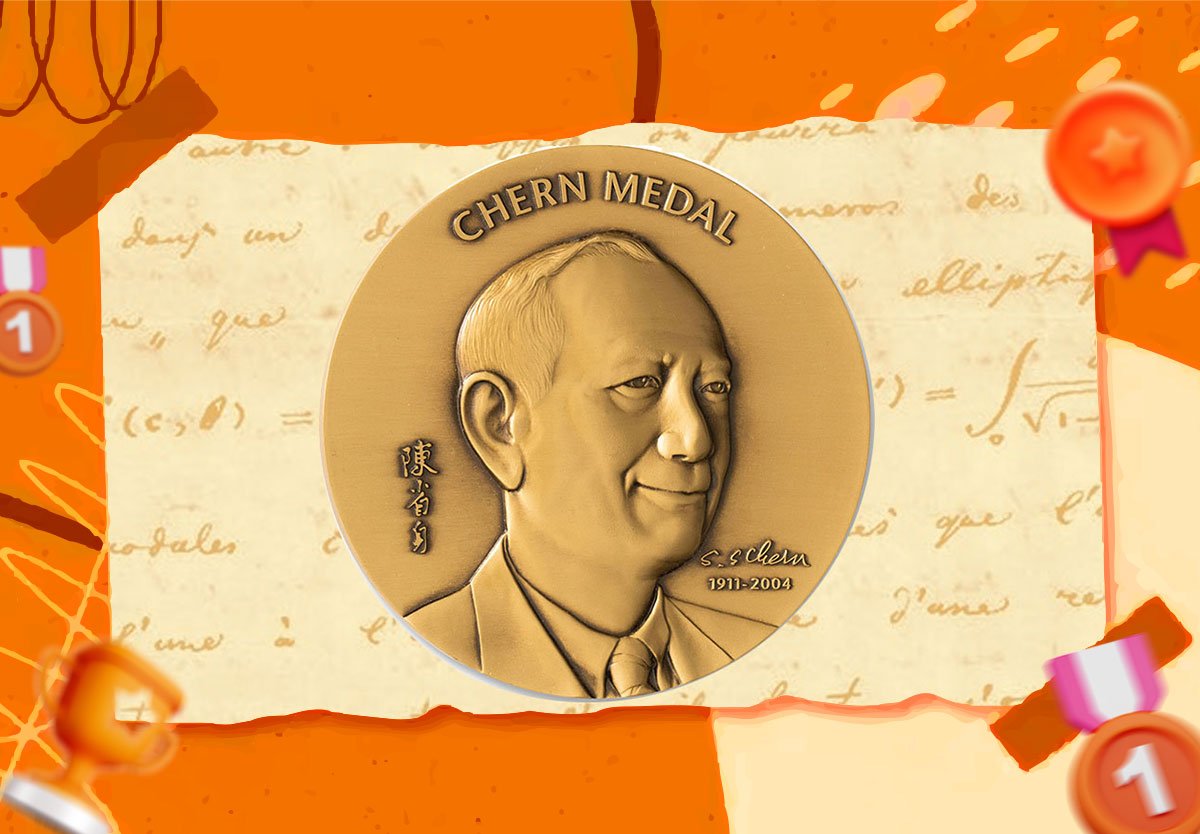
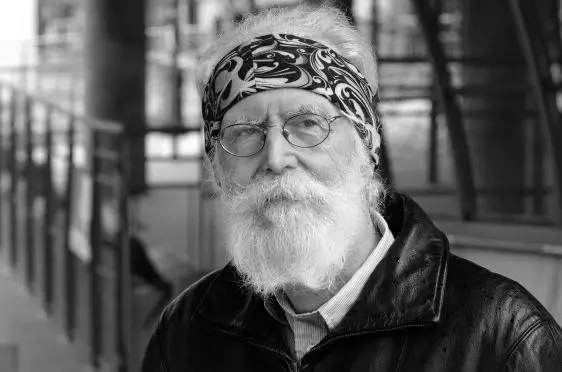
Masaki Kashiwara is a Japanese mathematician, professor at Kyoto University's Research Institute for Mathematical Sciences (RIMS) since 1978. He founded D-module theory and advanced microlocal/algebraic analysis, sheaf theory, and Hodge theory. He was awarded the 2025 Abel Prize for his fundamental contributions to algebraic analysis and representation theory, in particular the development of the theory of D-modules and the discovery of crystal bases, the first Japanese recipient, for foundational work connecting algebra, analysis, and representation theory; he also holds the Chern Medal.
|
|
2024
|
Michel Talagrand
|
Mathematician (probability theory, functional analysis)
|
|
|
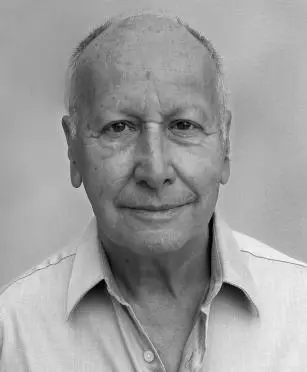
Michel Talagrand is a French mathematician, CNRS director of research since 1985, formerly affiliated with Institut de mathematiques de Jussieu and Ohio State University. Known for concentration of measure inequalities, majorizing measures/generic chaining, and proving the Parisi formula for spin glasses. He was awarded the 2024 Abel Prize for his work on suprema of stochastic processes, concentration of measures, and spin glasses.
|
|
2023
|
Luis A. Caffarelli
|
Mathematician (partial differential equations)
|
|
|
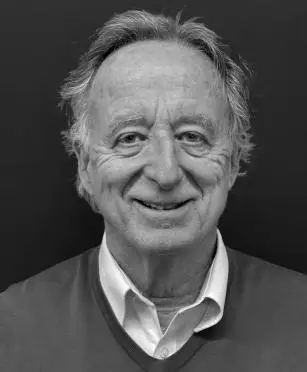
Luis A. Caffarelli is an Argentine-American mathematician holding the Sid Richardson Chair at the University of Texas at Austin, previously at the Institute for Advanced Study, Courant Institute (NYU), Chicago, and Minnesota. Renowned for regularity theory of nonlinear PDEs, free-boundary problems, and the Monge-Ampere equation, he was awarded the 2023 Abel Prize for his seminal contributions to regularity theory for nonlinear partial differential equations including free-boundary problems and the Monge–Ampère equation.; he also won the Wolf Prize (2012) and Shaw Prize (2018).
|
|
2022
|
Dennis Parnell Sullivan
|
Mathematician (algebraic and geometric topology, dynamical systems)
|
|
|
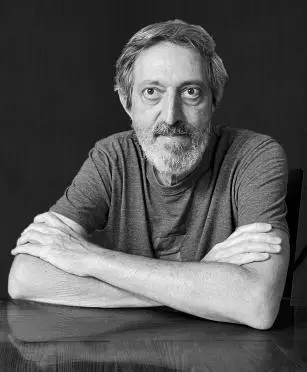
Dennis Sullivan is an American mathematician holding the Albert Einstein Chair at CUNY Graduate Center and a distinguished professorship at Stony Brook, formerly at IHES. He co-created rational homotopy theory, proved the no-wandering-domain theorem in holomorphic dynamics, and co-founded string topology. He was awarded the 2022 Abel Prize for his groundbreaking contributions to topology in its broadest sense, and in particular its algebraic, geometric and dynamical aspects; he also won the Wolf Prize (2010) and National Medal of Science (2004).
|
|
2021
|
Avi Wigderson
|
Mathematician/computer scientist (computational complexity theory)
|
|
|
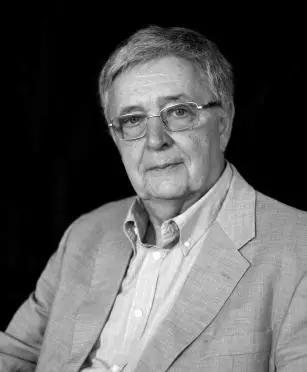
Avi Wigderson is an Israeli mathematician and computer scientist, Herbert H. Maass Professor at the Institute for Advanced Study, Princeton, since 2003. He pioneered work on randomness in computation, zero-knowledge proofs, and expander constructions. He shared the 2021 Abel Prize with Laszlo Lovasz for foundational contributions to theoretical computer science and discrete mathematics, and also won the 2023 Turing Award.
|
|
2021
|
László Lovász
|
Mathematician (combinatorics, graph theory, theoretical computer science)
|
|
|
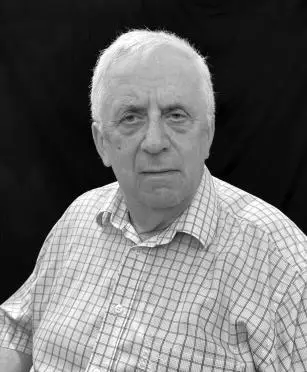
Laszlo Lovasz is a Hungarian mathematician, professor emeritus at Eotvos Lorand University, formerly at Yale and Microsoft Research, and past president of the International Mathematical Union. Known for the Lovasz Local Lemma, the Kneser's conjecture proof, and the LLL lattice reduction algorithm, he shared the 2021 Abel Prize with Avi Wigderson for shaping theoretical computer science and discrete mathematics.
|
|
2020
|
Gregory Margulis
|
Mathematician (ergodic theory, Lie groups, number theory)
|
|
|
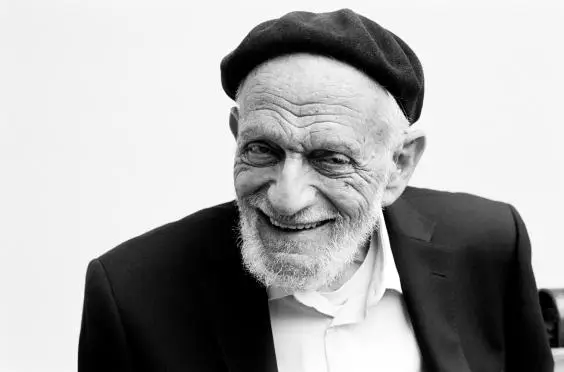
Gregory Margulis is a Soviet-American mathematician, Erastus L. De Forest Professor of Mathematics at Yale since 1991. He proved the superrigidity theorem, resolved the Oppenheim conjecture, and constructed early expander graphs. He won the Fields Medal (1978) and Wolf Prize (2005), and shared the 2020 Abel Prize with Hillel Furstenberg for pioneering probabilistic and dynamical methods in group theory, number theory, and combinatorics.
|
|
2020
|
Hillel Furstenberg
|
Mathematician (ergodic theory, probability, number theory)
|
|
|
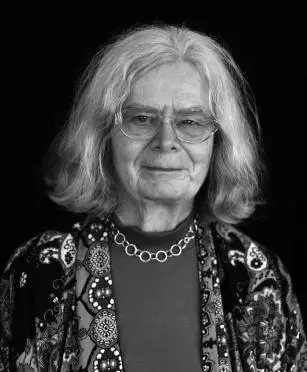
Hillel Furstenberg is an American-Israeli mathematician, professor emeritus at the Hebrew University of Jerusalem. Known for a topological proof of the infinitude of primes, the Furstenberg boundary, and an ergodic-theoretic proof of Szemeredi's theorem, he shared the 2020 Abel Prize with Gregory Margulis for pioneering probabilistic and dynamical methods in group theory, number theory, and combinatorics. He also won the Wolf Prize (2006/07).
|
|
2019
|
Karen Keskulla Uhlenbeck
|
Mathematician (geometric analysis, gauge theory)
|
|
|
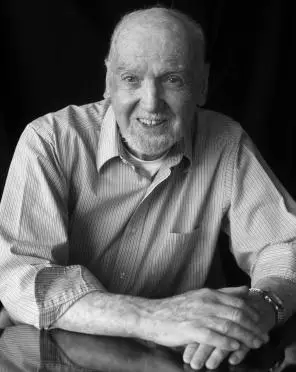
Karen Uhlenbeck is an American mathematician, professor emerita at the University of Texas at Austin and visiting scholar at the Institute for Advanced Study and Princeton. A founder of modern geometric analysis, known for regularity results in harmonic maps and Yang-Mills theory, she became in 2019 the first woman awarded the Abel Prize, cited for pioneering work in geometric PDEs, gauge theory, and integrable systems.
|
|
2018
|
Robert P. Langlands
|
Mathematician (representation theory / number theory)
|
|
|
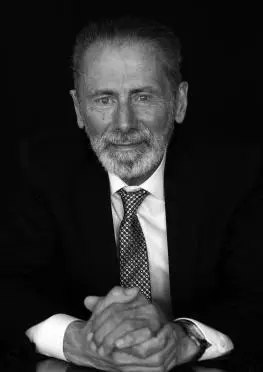
Robert Langlands is a Canadian-American mathematician famous for the 'Langlands program,' a vast web of conjectures connecting representation theory, automorphic forms, and number theory via Galois groups, outlined in his 1967 letter to Andre Weil. Long affiliated with Princeton, Yale, and the Institute for Advanced Study, he won the 2018 Abel Prize for his visionary program unifying number theory and representation theory.
|
|
2017
|
Yves Meyer
|
Mathematician (harmonic analysis / wavelet theory)
|
|
|
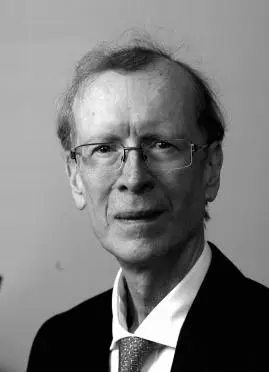
Yves Meyer is a French mathematician best known for developing the mathematical theory of wavelets, including the Meyer wavelet, transforming signal and image processing. He held positions at Paris-Sud, Ecole Polytechnique, Paris-Dauphine, and Ecole Normale Superieure de Cachan. He received the 2017 Abel Prize for his pivotal role in the development of the mathematical theory of wavelets, and earlier the 2010 Gauss Prize.
|
|
2016
|
Sir Andrew J. Wiles
|
Mathematician (number theory)
|
|
|
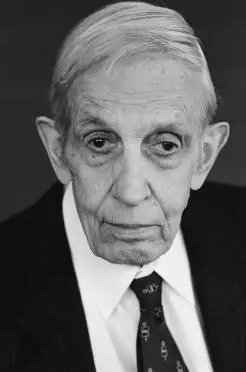
Andrew Wiles is a British mathematician renowned for proving Fermat's Last Theorem in 1994-95 by establishing the modularity theorem for semistable elliptic curves. A professor at Princeton for decades and later Regius Professor at Oxford, he received the 2016 Abel Prize for his stunning proof of Fermat's Last Theorem, which opened new pathways within the Langlands program; he also holds the Copley Medal.
|
|
2015
|
John F. Nash
|
Mathematician (game theory / partial differential equations)
|
|
|
John F. Nash was an American mathematician famed for the Nash equilibrium in game theory (Nobel Memorial Prize in Economics, 1994) and for the Nash embedding theorems in differential geometry. Long associated with Princeton and MIT, he shared the 2015 Abel Prize with Louis Nirenberg for contributions to nonlinear partial differential equations. He and his wife died together in a taxi crash days after receiving the prize.
|
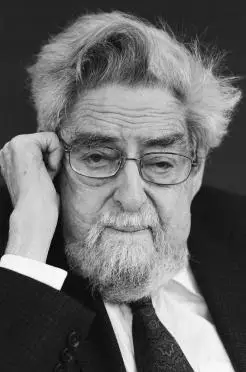
|
2015
|
|
Mathematician (partial differential equations)
|
|
|
Louis Nirenberg was a Canadian-American mathematician at NYU's Courant Institute for his entire career, renowned for foundational work on nonlinear elliptic PDEs, including the Newlander-Nirenberg theorem and Gagliardo-Nirenberg inequalities. He shared the 2015 Abel Prize with John Nash for his achievements in non-linear elliptic partial differential equations and for mentoring numerous students and post-docs in this area.; he also held the Chern Medal and the Crafoord Prize.
|
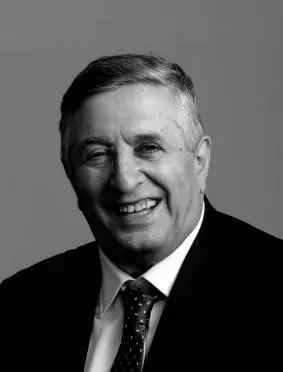
|
2014
|
Yakov G. Sinai
|
Mathematician (dynamical systems / ergodic theory)
|
|
|
Yakov Sinai is a Russian-American mathematician known for foundational contributions to dynamical systems, ergodic theory, and mathematical physics, including Kolmogorov-Sinai entropy and Sinai billiards. Affiliated with Moscow State University, the Landau Institute, and Princeton University, he received the 2014 Abel Prize for his fundamental contributions to dynamical systems, ergodic theory, and mathematical physics.
|
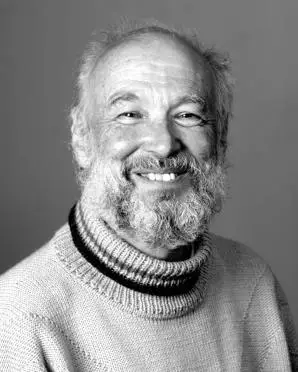
|
2013
|
Pierre Deligne
|
Mathematician (algebraic geometry / number theory)
|
|
|
Pierre Deligne is a Belgian mathematician celebrated for completing the proof of the Weil conjectures (1973) and developing mixed Hodge theory. Based at IHES and later the Institute for Advanced Study, he won the Fields Medal (1978), the Wolf Prize (2008), and the 2013 Abel Prize for seminal contributions to algebraic geometry and their transformative impact on number theory and representation theory.
|
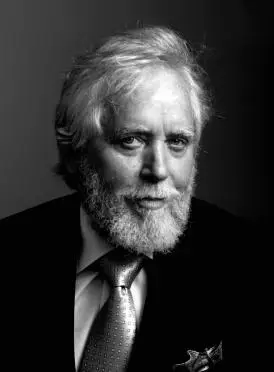
|
2012
|
Endre Szemerédi
|
Mathematician (combinatorics / theoretical computer science)
|
|
|
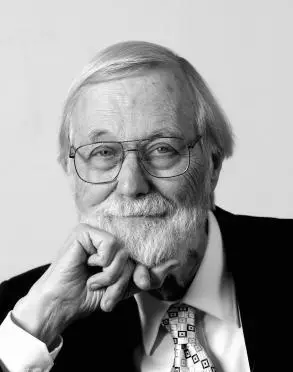
Endre Szemeredi is a Hungarian-American mathematician renowned for Szemeredi's theorem on arithmetic progressions and the Szemeredi regularity lemma, cornerstones of combinatorics and graph theory. A professor at Rutgers University and the Renyi Institute in Budapest, he won the 2012 Abel Prize for his fundamental contributions to discrete mathematics and theoretical computer science.
|
|
2011
|
John Milnor
|
Mathematician (differential topology / algebraic K-theory)
|
|
|
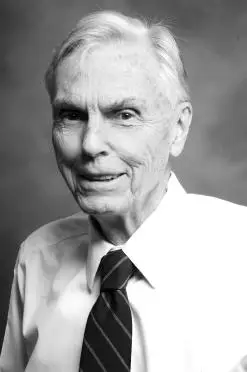
John Milnor is an American mathematician famous for discovering exotic differentiable structures on the 7-sphere in 1956, founding modern differential topology. He also proved the Fary-Milnor theorem and made major contributions to K-theory and dynamical systems. Long at Princeton, IAS, and Stony Brook, he won the Fields Medal (1962), the Wolf Prize (1989), and the 2011 Abel Prize for pioneering discoveries in topology, geometry and algebra.
|
|
2010
|
John Torrence Tate
|
Mathematician (algebraic number theory / arithmetic geometry)
|
|
|
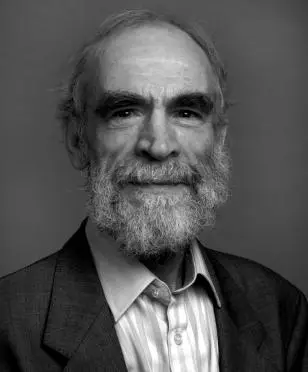
John Tate was an American mathematician whose foundational work, including Tate's thesis, Tate cohomology, the Tate curve, and the Tate conjectures, shaped modern algebraic number theory and arithmetic geometry. He was a longtime professor at Harvard and later the University of Texas at Austin, and received the 2010 Abel Prize for his vast and lasting impact on the theory of numbers.
|
|
2009
|
Mikhail Leonidovich Gromov
|
Mathematician (geometry, geometric group theory, and mathematical analysis)
|
|
|
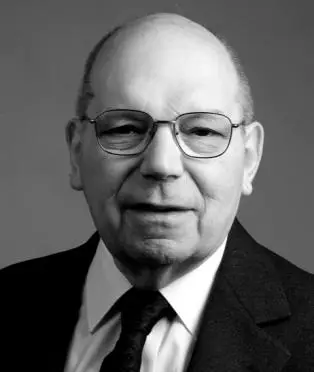
Mikhail Gromov is a Russian-French mathematician renowned for revolutionary contributions to Riemannian geometry, symplectic geometry, and geometric group theory, including Gromov's theorem on groups of polynomial growth and Gromov-Hausdorff convergence. He has held positions at IHES (France) and NYU, and won the 2009 Abel Prize for his revolutionary contributions to geometry, plus the Wolf Prize (1993) and Kyoto Prize (2002).
|
|
2008
|
Jacques Tits
|
Mathematician (group theory and incidence geometry)
|
|
|
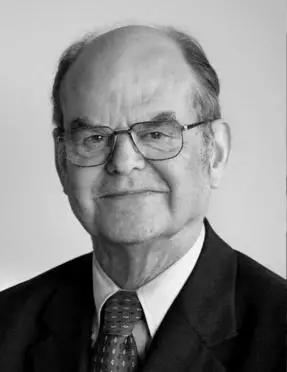
Jacques Tits was a Belgian-French mathematician who created the theory of buildings, a geometric framework for understanding groups of Lie type, and developed the Tits alternative and Tits group. He held professorships at the Free University of Brussels, University of Bonn, and College de France. He shared the 2008 Abel Prize with John G. Thompson for shaping modern group theory.
|
|
2008
|
John Griggs Thompson
|
Mathematician (finite group theory)
|
|
|
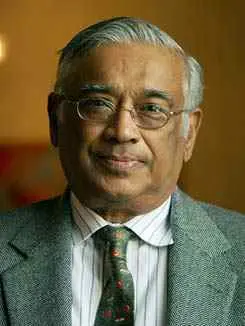
John Thompson is an American mathematician celebrated for his foundational work in finite group theory, including the Feit-Thompson theorem (proving all finite nonabelian simple groups have even order) and his contributions to the classification of finite simple groups. He has taught at Harvard, University of Chicago, Cambridge, and University of Florida. He shared the 2008 Abel Prize with Jacques Tits for shaping modern group theory.
|
|
2007
|
|
Mathematician (probability theory, large deviations)
|
|
|
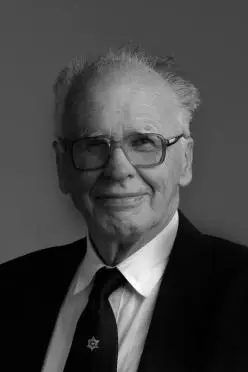
S.R. Srinivasa Varadhan is an Indian-American mathematician and probabilist at the Courant Institute, NYU, celebrated for creating a unified theory of large deviations, work that reshaped probability theory's approach to rare events. He won the 2007 Abel Prize for his fundamental contributions to probability theory and for creating a unified theory of large deviation. He also holds the National Medal of Science (2010).
|
|
2006
|
Lennart Carleson
|
Mathematician (harmonic analysis and dynamical systems)
|
|
|
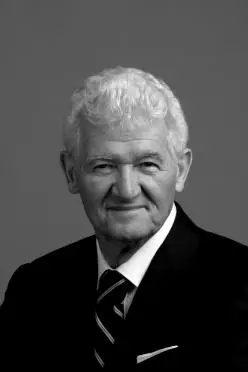
Lennart Carleson is a Swedish mathematician famous for proving Carleson's theorem (pointwise convergence of Fourier series for L-squared functions), resolving a longstanding conjecture of Lusin. He led the Mittag-Leffler Institute and held professorships at Uppsala, KTH Stockholm, and UCLA. He won the 2006 Abel Prize for his profound and seminal contributions to harmonic analysis and the theory of smooth dynamical systems.
|
|
2005
|
Peter D. Lax
|
Mathematician (applied mathematics, partial differential equations)
|
|
|
Peter Lax was a Hungarian-American mathematician at NYU's Courant Institute, celebrated for foundational work on hyperbolic partial differential equations, shock waves, integrable systems, and scientific computing, including the Lax-Milgram theorem, Lax pairs, and the Lax-Wendroff scheme. He won the 2005 Abel Prize for his groundbreaking contributions to the theory of PDEs and to computing their solutions, and also received the Wolf Prize and National Medal of Science.
|
|
2004
|
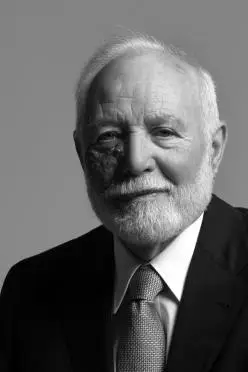
Isadore M. Singer
|
Mathematician (index theory and differential geometry)
|
|
|
Isadore Singer was an American mathematician best known for proving the Atiyah-Singer index theorem with Michael Atiyah in 1962/1963, a landmark result linking topology, geometry, and analysis and forging deep connections between mathematics and theoretical physics. He was a longtime professor at MIT. He shared the 2004 Abel Prize with Atiyah for the discovery and proof of the index theorem.
|
|
2004
|
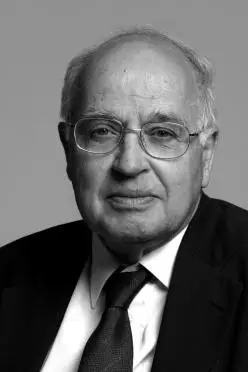
Sir Michael Francis Atiyah
|
Mathematician (algebraic topology and index theory)
|
|
|
Michael Atiyah was a British mathematician renowned for co-developing, with Isadore Singer, the Atiyah-Singer index theorem and for foundational work in topological K-theory. He served as President of the Royal Society, Master of Trinity College Cambridge, and held posts at Oxford, Cambridge, and the Institute for Advanced Study. He won the Fields Medal (1966) and shared the 2004 Abel Prize with Singer for the index theorem.
|
|
2003
|
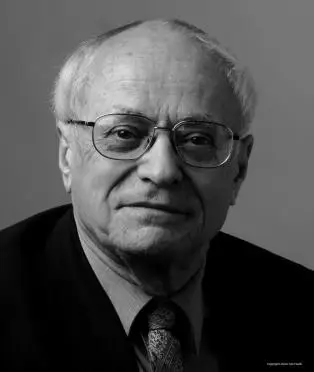
Jean-Pierre Serre
|
Mathematician (algebraic topology, algebraic geometry, and number theory)
|
|
|
Jean-Pierre Serre is a French mathematician with foundational contributions across algebraic topology, algebraic geometry, and number theory, including work on sheaf theory, Galois representations, and group cohomology. A longtime professor at the College de France, he became the youngest-ever Fields Medalist in 1954, at age 27. In 2003 he became the inaugural recipient of the Abel Prize, honoring his role in shaping the modern form of many parts of mathematics.
|